
. Skip to main content
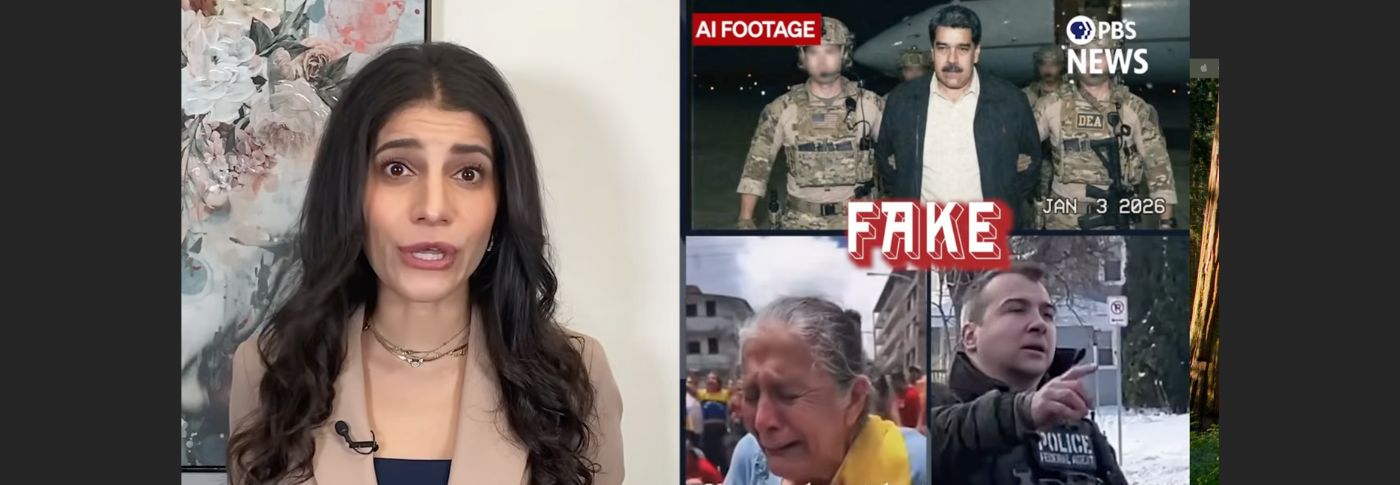
Split-screen image from a PBS NewsHour Classroom video. On the left, a news anchor speaks in front of a floral background. On the right, examples of AI-generated fake footage appear: a staged arrest with “AI FOOTAGE” label, crying woman in a protest, and a man in a police uniform—all overlaid with the word “FAKE” and a “Jan 3 2026” timestamp. PBS News logo in the corner.

Image credit: PBS

What to Know About AI-Generated Content Spiking Amid News Events

January 20, 2026

What to Know About AI-Generated Content Spiking Amid News Events

AI-generated images and videos are flooding social media during major news events. Help students analyze what’s real—and what’s not.
Share

Share On Facebook
Share On Twitter
Share On Pinterest
Share On LinkedIn
Email

Note: If you are short on time, watch the video and complete this See, Think, Wonder activity: What did you notice? What did the story make you think? What would you want to learn more about?

Quickly after news dropped of Venezuelan President Nicholas Maduro’s capture by U.S. forces in January, misleading AI-generated content began racking up millions of views on social media. As technological advancements give anyone the ability to create compelling footage, social media platforms have given those posts a place to rapidly spread, diluting the ability to find trustworthy content. News Hour talks with Hany Farid, a professor at the University of California, Berkeley, who emphasized that social media platforms aren't the place to search for news unless it’s posted by credible, verified news accounts.

Remote video URL

Warm-Up Questions

  1. Who is affected by fake AI images over social media?
  2. When did the problem of misinformation and disinformation begin, according to Prof. Farid?
  3. Why are creators and social media companies going through such effort to create fake AI images?
  4. What guardrails or barriers exist to help the public know what content is fake and what isn't, according to Farid?
  5. How is using trusted sources the most reliable way to avoid getting fooled by AI, according to Farid?

Essential Questions

  • Do you agree with Prof. Hany Farid that social media is not a place to get reliable information? Explain.
  • How does fake AI content make the political divisions in our country worse?
  • What do you think needs to be done to improve the problem of fake AI content?
  • Media literacy: How does Farid detect what information is real and what is fake? Without access to such technology, what are strategies to not be tricked by fake AI content?

What Students Can Do

  1. Read this section with a family member or classmate on recognizing AI-generated information from the Learning for Justice article, "Media Literacy Is Vital for Informed Decision-Making." Be sure to take a look at the SPLC link at the end to see what questions you said "YES" to — though as the authors state, AI technology is changing so fast that such clues may soon prove futile (useless).

Subscribe to Our Newsletter

Want to see more stories like this one? Subscribe to the SML e-newsletter!

Republished with permission from PBS News Hour Classroom.

PBS News Hour Classroom
PBS News Hour Classroom helps teachers and students identify the who, what, where and why-it-matters of the major national and international news stories. The site combines the best of News Hour's reliable, trustworthy news program with lesson plans developed specifically for... See More
Advertisement

Post a comment

Log in or sign up to post a comment.