



By Sara Casto
I knew early in my life that a career in education would be my future. I grew up loving to read and learn. I played “school” at our home and loved “teaching” my younger siblings. In eighth grade, I used my study hall to be a helper in a third grade classroom.
At the same time I was developing a love of teaching, I was growing up on our family farm, working beside my parents and siblings — taking care of livestock, gathering eggs, helping in the fields, with equipment and in the garden. I was entrusted with chores and responsibilities and had to make decisions, complete tasks and remember to turn off the water and close the gates. Growing up on a farm taught me responsibility, compassion and how to have a strong work ethic.
Then, as a member of the National FFA Organization (also known as Future Farmers of America) in my high school agriculture class, I realized I could merge my passion for education with my passion for agriculture to make the perfect career. Today, teaching agricultural education is a new adventure every day. The three-circle model we use — classroom, leadership and experiential learning — really reaches students and teaches them not just farm skills, but life skills. Here’s how it works.
Classroom Learning
In my classroom, we read, write, do math and science, study history, conduct research and present findings. My students learn about problem-solving, engineering and safety through projects in our wood/metal shop. This fall we have studied careers, soils, business, the history of the FFA and more.
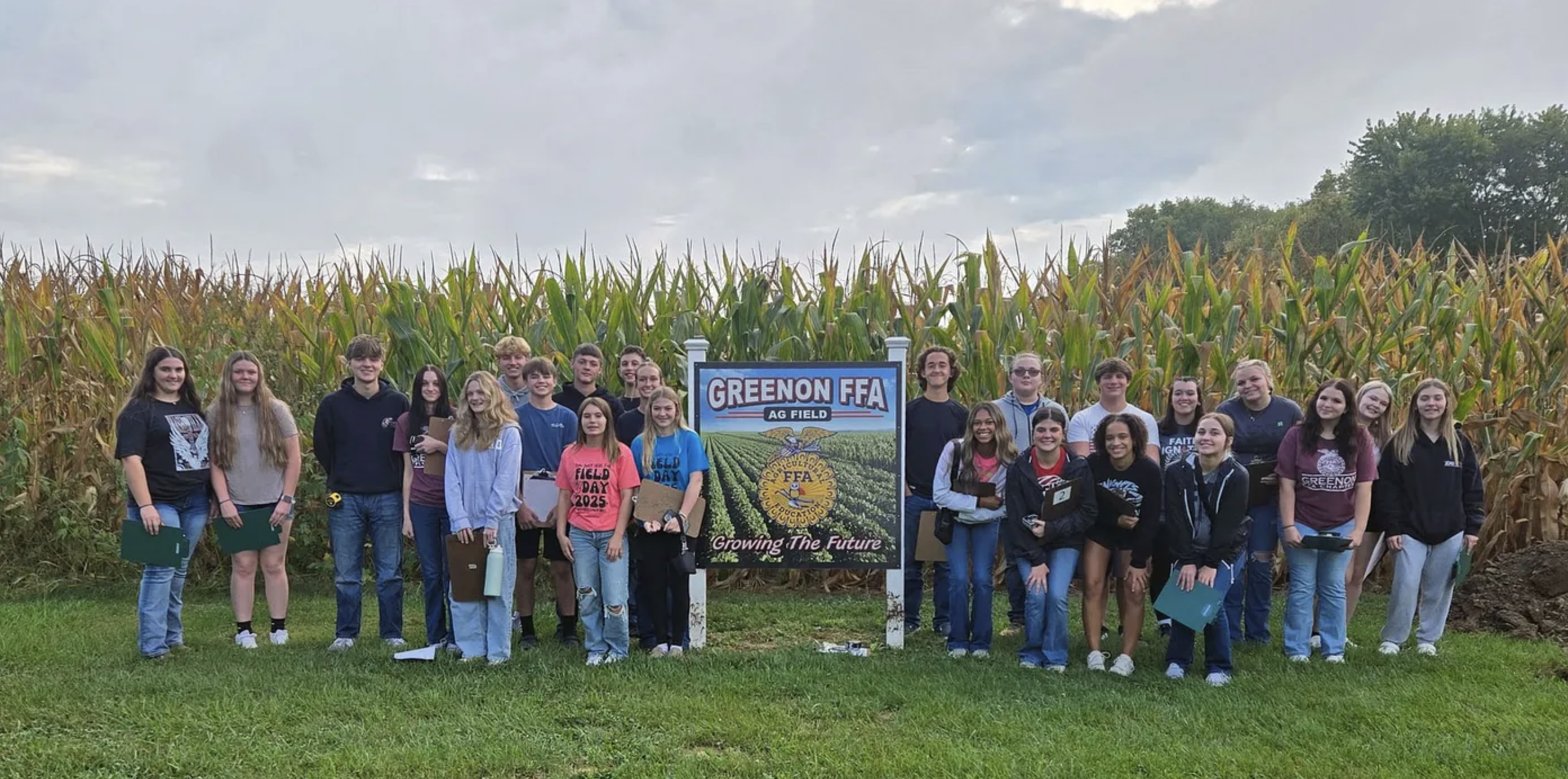
After preparing in class, we spent a day in the corn field learning about corn plants, calculating yield estimation and taking soil samples. A few weeks later we watched that very field be harvested. Students got to ride in the combine! And they talked with local farmers. They were surprised to see how much technology is used in the equipment cabs as they monitor moisture, yield and soil.
Growing up on a farm taught me responsibility, compassion and how to have a strong work ethic.
We’ve also attended Farm Science Review, National FFA and Ohio Legislative Leadership conferences and conventions and numerous career development events, and hosted an awards ceremony, a state leadership event, a blood drive for our community, and our annual fruit sale fundraiser. Along with the usual content standards and exams, we’ll also complete woodworking and welding projects in the shop. There’s never a dull moment.
Leadership Development
The National FFA Organization shapes the leadership portion of our model, and every student is a member. While not all my students will become farmers, they will all develop an appreciation for the agriculture industry.
The FFA work involves career development events that cover everything from soil judging to food science and technology, livestock judging — and job interviews. The students plan events like blood drives, a Farm Day for younger students (complete with petting zoo) and even a Drive Your Tractor to School Day. I remember one shy freshman coming out of her shell to speak in front of the entire school during a Veterans Day program she helped plan, introducing veterans who spoke in the auditorium. That’s a real win.
Experiential Learning
To round out the three-circle model, my students undertake a “supervised agricultural experience” — we call it the SAE. Students combine their resources and interests to plan and implement their projects together: They document their time, income and expenses, paychecks and learning objectives, and they exhibit their SAEs at the county fair. They also contribute 10 hours of community service each year.
I love seeing their projects, it’s an absolute favorite part of my job:
HIGH SCHOOL JUNIOR KILEY has had a garden for two years, learning the patience, care and consistent daily attention it takes to grow plants — and how rewarding it is to see literal growth and success based on her effort.
SENIORS Kyndall, Averi, Skylar and Olive work at Sunset Ridge Lavender Farm harvesting lavender, preparing products and working with customers. They have learned about plant care, responsibility and the importance of communication skills for future leadership and career opportunities.
SENIOR ABIGAIL has been working with horses and training them — learning how to teach horses and handle major ups and downs, both mentally and physically. She showed at the local county fair and at the 2025 Quarter Horse Congress.
SENIOR KAI caught a steer at the 2024 scramble — a rodeo event where livestock are released into a ring and participants snatch ribbons from the animals for prizes. He raised the steer for about 10 months, then showed and sold it at the county fair. Kai learned patience and work ethic through the daily routines of grooming, feeding and caring for this animal, and placed fourth in the market show at the fair.
SOPHOMORE MILLIE raised market goats, learning to manage money, keep records, manage her time and be responsible for daily care. She showed and sold her goats at the annual county fair.
After the students graduate, the success continues. Kacie, who graduated in 2021, is now teaching high school agriculture in southern Ohio. Emily, a 2018 graduate, is our family’s veterinarian and has been out to our farm to help with our livestock and my son’s fair goats. Cooper runs his own landscaping/lawn care business and coaches football, basketball and baseball. He even employs some of my students for their SAEs.
Among our other graduates: Maleigha, a labor and delivery and IVF nurse; Jenny, a zookeeper; Madison, a kindergarten teacher; and Evan, a mechanic in the Army. These students, and so many others, have gone on to do great things in their lives and in our society. They work in all different industries — accounting, medicine, education, agriculture, the military and more. It is such a rewarding feeling to see their success.
This is what keeps me going — I get to guide these students through new experiences and toward lifelong learning. When students question if they should take an ag class — especially if they don’t live on a farm — I say, “Did you eat food today? Did you wear clothes today? You used agriculture today!” My students understand how relevant these classes can be, they learn by doing, and they know their new skills will transfer to future careers.
I often say that if you’re concerned about the future of our country, spend a day with a group of FFA members; they’ll eliminate that concern pretty quickly. They might make your hair turn gray in the process, but you’ll be laughing and impressed none-the-less. These students are hard workers, communicators, problem-solvers and helpers.
As unionists, we all work for the greater good; as teachers, we get to leave a positive impact one student at a time, with a ripple effect that reaches into families, communities and society as a whole. Connecting with other career and technical education teachers has taught me just how big an impact we can have.

About the Author
Sara Casto is a high school agriculture teacher at Greenon High School in Enon, Ohio; a member of the Greenon Federation of Teachers; and a member of the Ohio Federation of Teachers Career Tech committee.
Career Exploration
This curated career exploration collection offers lessons on potential careers, pathways into those careers, how to create a career portfolio, gap year opportunities, positive changes that individuals have made through their chosen careers, and more.
Subscribe to Our Newsletter
Want to see more stories like this one? Subscribe to the SML e-newsletter!

The AFT was formed by teachers more than 100 years ago and is now a 1.8 million-member union of professionals that champions fairness; democracy; economic opportunity; and high-quality public education, healthcare and public services for our students, their families and our communities. We are... See More
Advertisement