. Skip to main content
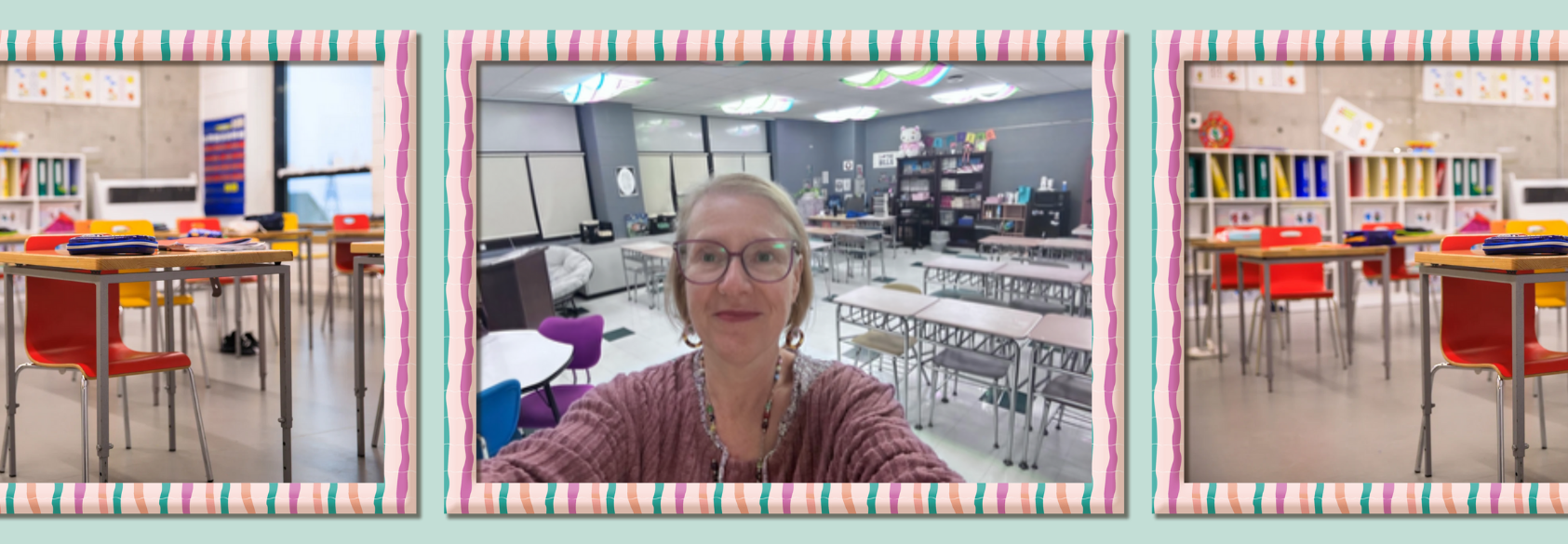
Three side-by-side classroom images in decorative frames; the center photo shows educator Amber Chandler smiling in her classroom, with desks and classroom materials in the background.

Educator Amber Chandler in her classroom (center), alongside stock classroom images (left and right).

Reclaiming Connection in the Classroom: Why Structure Matters Right Now

January 21, 2026

Reclaiming Connection in the Classroom: Why Structure Matters Right Now

Learn why Educator Amber Chandler made a surprising change: swapping flexible seating for rows. She shares how structure helped her students reconnect, refocus, and learn together again.

Share

Share On Facebook
Share On Twitter
Share On Pinterest
Share On LinkedIn
Email

The Monday after Thanksgiving, my students returned to a classroom with seats in rows. My room was sparkling clean; I was excited and nervous—and prepared for pushback. You can hear the trepidation about this change, and I was definitely emotional in my Dec. 2 #threeminutethoughts. The fact is, I’ve had fully flexible seating since receiving a grant in 2018. It was the very first thing students knew about me, parents complimented me, and we all agreed my classroom had a great vibe. To be clear: I love flexible seating. I tell you here, and here, and here and this one here from a decade ago, before I even had the grant. Yet, as I re-read all of these testimonials, it wasn’t so much the seating that I cared about—though that was fun—it was the community that we were building. Why then, if flexible seating is so amazing, did I abandon it? 

I’ll be honest. It’s hard to talk about why I chose to make a change this big after a decade where I’d (mostly) successfully differentiated seating and instruction. In the pit of my stomach though, I knew the truth. Student behaviors in the classroom need a level of management that flexible seating will simply not support. Everyone gets defensive about it (myself included), but most of us have lost the ability to give a side-eye that works or a signal to quiet things down. In fact, I probably held on to flexible seating a bit too long because I was convinced my safe, comfortable classroom would encourage better behaviors. 

Student behaviors in the classroom need a level of management that flexible seating will simply not support.

However, one day before Thanksgiving, I finally reached a tipping point. I’ve always prided myself on classroom management, and I’ll be the first to tell you that if you walked by my room when I had flexible seating, you wouldn’t see chaos. In fact, I don’t write referrals, and students are often better in our classroom than in others. However, when I couldn’t get students’ attention quickly and fully, when they didn’t respect the flexible seating, and our learning suffered, I was done. It was not punitive, but it was meant to be a shock to their world. It was a consequence of their actions. Not because I didn’t like them or I was mad at them but because I do like them and care enough to do something about it. 

However, as I prepared to write this blog, I struggled with the research that says bullying and fighting rates are down. Technically, that may be true, but I don’t report the everyday behaviors that were sidetracking learning.  Most of us don’t. Who are we supposed to tell that many students leave wrappers on the floor, refuse to stop talking, go on games, even when they know I am watching? These are not “events” that require an administrative intervention, but they are some of the things that were troubling me. Day after day, I’d find myself thinking, “the kids are just different,” but really, underneath the last decade of traumas from COVID-19, technology addiction and isolation, the kids were the same. They want us to like them. They want to do well. They are very insecure. Many are depressed and anxious. They are the walking wounded, and it is their behaviors that are different.  I was thrilled to find Jeff Whittle’s “When Data and Reality Diverge on Student Behavior.” He writes, “The numbers may capture suspensions or criminal acts, but they miss the daily grind of disrespect, defiance and emotional dysregulation that wears us down.” 

The first day, as I stood at the door assigning seats, the grumbling didn’t deter me. Most people hate change. It felt strange to look out and see students nestled into my egg carton seating arrangement. The days came and went, and within a few weeks, I marveled at the change in our class. The incessant talking over me and each other had stopped; students seemed more respectful in general, and I saw academic improvement. My co-teacher and I had to move a few people around, of course; in general. the vibe was different, but we were still us, and I feel the community is evolving. 
The incessant talking over me and each other had stopped; students seemed more respectful in general, and I saw academic improvement.

I aligned this new seating with a computer-free unit we are working on. I’ll share more soon because the unit is evolving, but these resources are available now: “Writing About Jason Reynolds,” “A Long Time Coming” and “Comparison and Contrast With Jason Reynold’s Long Way Down and S.E. Hinton’s The Outsiders.” We decided that after Christmas we’d start with Long Way Down. Jason Reynolds’ reading is captivating, and as my students were fully engaged—in fact hanging on his every word, pages flipping quietly and in unison—I could feel my shoulders dropping from releasing the constant tension. When I asked questions, and students who never participated before were volunteering, I knew that providing more structure in unprecedented chaos had been the right move. It occurred to me that we were more of a community when we were deeply involved in learning together, and my fears that my classroom would become sterile and boring weren’t true. 

For the first time in a long time, we were all engaged in the learning at hand. I was not playing whack-a-mole to keep kiddos on task, and I wasn’t waiting forever to get students on task, so I was actually able to really teach, like it was before COVID-19 and screens and chaos. I have implemented some old-school strategies: 

  • Journaling in composition books;
  • Drafting by hand;
  • Taking notes; and
  • Round-robin sharing (though I never force anyone). 

The other day, when the bell rang and students grumbled because they had to leave, I knew it. I am SOOO back, I thought, to borrow from my daughter’s Instagram feed. I wasn’t being untrue to myself or giving up on community; rather, I am fighting for what I know matters: my students. Their behaviors are different, but in a true flexible classroom, that means that we have to figure out what works, and I am willing to give up what had become comfortable to me

I was not playing whack-a-mole to keep kiddos on task, and I wasn’t waiting forever to get students on task, so I was actually able to really teach, like it was before COVID-19 and screens and chaos.

My new book Reclaiming Connection: How Schools and Families Can Nurture Belonging in a Scared New World will be out March 4. (You can pre-order here.) In it, I interview educators and experts about what we can do to be “SOOO back,” and their answers might surprise you, as they certainly did me. I’d love to engage with you about ways you are clawing your way back, what strategies you are using and what resources are helpful, so please follow me here on Share My Lesson, and check out my new website ReclaimConnection.com. I’ll be posting some videos about Reclaiming Connection on my Amazon author page, so follow me there as well. In the meantime, ask yourself what you need to feel the old spark, the old joy and the old teacher moments, and give them a try. Sitting in my classroom, with rows of desks and composition books out, I look out and know that I provided structure in a time of chaos, and it is working. Don’t worry, I’m not deserting Digital Citizenship, Digital Portfolios, or preparing for a future with AI . We just needed to unplug and plug it back in later to see if it works.

Effective Teaching Tips: Strategies, Tools and Ideas

Empower your teaching with effective strategies and tools designed to support the whole student. This collection features insightful webinars and blogs covering student well-being, creating positive school environments, and fostering inclusive classrooms.

Subscribe to Our Newsletter

Want to see more stories like this one? Subscribe to the SML e-newsletter!

Amber Chandler
  Amber Chandler is a National Board Certified middle school ELA teacher in Hamburg, New York with a Master’s Degree in Literature, as well as a School Building Leader certification. She is the 2018 Association for Middle Level Educators’ “Educator of the Year.”  Amber has enjoyed a wide variety of... See More
Advertisement

Post a comment

Log in or sign up to post a comment.